
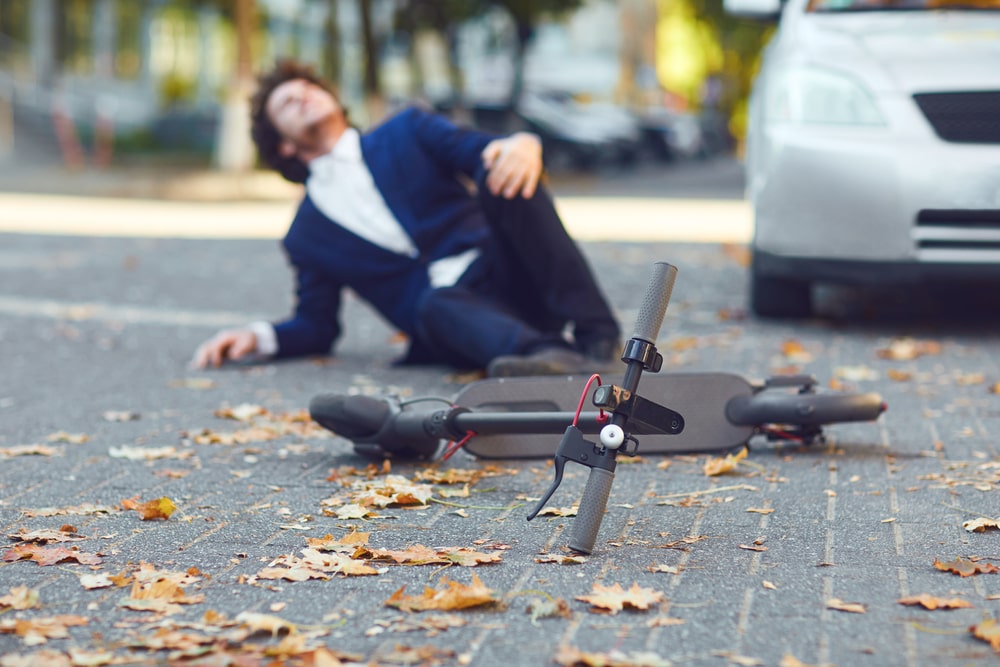
Electric scooters have transformed urban transportation in cities across the country. Companies like Lime, Bird, and Spin have deployed millions of shared e-scooters, offering an affordable and convenient alternative to rideshares and public transit. But as e-scooter ridership has grown, so has the number of serious injuries. At Mitchell & Danoff Law Firm, Inc we have seen firsthand how emergency rooms are reporting a sharp increase in e-scooter-related injuries, including broken bones, traumatic brain injuries, and facial fractures. When these accidents happen, the question of who is legally responsible is far more complicated than most people expect.
The Complicated Web of Liability
In a typical car accident, the liability analysis is relatively straightforward: one or more drivers were negligent, and the injured party files a claim against the at-fault driver’s insurance. E-scooter accidents are different because there are often multiple parties who may share responsibility, and the legal framework for assigning liability is still evolving in many jurisdictions.
Potential defendants in an e-scooter injury case can include the rider of the scooter, the e-scooter company, a motor vehicle driver, a property owner, and even the municipality. Determining which parties bear responsibility requires a careful analysis of the facts and an understanding of several overlapping areas of law, from product liability to premises liability to municipal negligence.
When the E-Scooter Company May Be Liable
One of the most actively litigated questions in e-scooter injury cases is whether the scooter company itself can be held responsible. Product liability claims against e-scooter companies generally fall into two categories: manufacturing defects and design defects.
Manufacturing defect claims arise when a specific scooter has a flaw that makes it unreasonably dangerous—a faulty brake, a defective battery, or a steering column that fails under normal use. Design defect claims target the fundamental design of the scooter itself, arguing that even a perfectly manufactured unit is inherently dangerous due to features like small wheel size, inadequate lighting, or a top speed that is too fast for the riding environment.
E-scooter companies have attempted to shield themselves from liability through user agreements that include arbitration clauses and liability waivers. Riders typically agree to these terms by tapping “accept” on a phone screen before their first ride. Courts across the country are split on whether these clickwrap agreements are enforceable, and the outcomes often depend on how prominently the waiver language was displayed and whether the user had a meaningful opportunity to review it.
Motor Vehicle Drivers and E-Scooter Accidents
Many of the most serious e-scooter injuries occur when a scooter rider collides with a motor vehicle. In these cases, the standard rules of negligence apply. If a car driver fails to yield to a scooter in a bike lane, opens a door into the path of a passing rider, or makes a right turn without checking for scooters, the driver may be liable for the resulting injuries.
However, comparative fault often comes into play. If the scooter rider was riding on the sidewalk in violation of local ordinances, running a red light, or riding while intoxicated, their own negligence may reduce or even eliminate their ability to recover compensation. The specific impact of the rider’s contributory negligence depends on whether the state follows a pure comparative fault system, a modified comparative fault system, or the older contributory negligence doctrine.
Municipal Liability and Infrastructure Failures
A significant number of e-scooter accidents are caused not by another vehicle or a defective scooter, but by poor road conditions. Potholes, cracked pavement, uneven sidewalks, missing drain covers, and poorly maintained bike lanes can all send a scooter rider to the ground. When a municipal infrastructure defect causes an injury, the city or county responsible for maintaining the roadway may be liable.
Claims against government entities come with unique procedural requirements. Most states have tort claims acts that impose strict notice deadlines—often as short as 30 to 90 days after the injury—and caps on the amount of damages that can be recovered. Missing the notice deadline can permanently bar the claim, regardless of how clear the municipality’s negligence may be.
The Insurance Gap Problem
One of the most frustrating aspects of e-scooter injury cases is the insurance gap. Unlike cars, e-scooters are not required to carry liability insurance in most jurisdictions. E-scooter companies generally carry commercial liability policies, but accessing those policies can be challenging, especially when the company argues the rider assumed the risk or that the injury was caused by a third party.
For injured pedestrians struck by an e-scooter rider, the situation can be even more difficult. The individual rider almost certainly does not carry e-scooter liability insurance, and standard auto insurance policies typically exclude coverage for motorized scooters. This means the injured pedestrian may have limited options for recovery unless they can pursue a claim against the e-scooter company directly or access their own health insurance or uninsured motorist coverage.
Protecting Yourself After an E-Scooter Accident
Whether you are a scooter rider, a pedestrian, or a motorist involved in an e-scooter accident, taking the right steps immediately after the incident can protect your ability to pursue a claim. A Monterey, CA personal injury lawyer can help evaluate the circumstances of the crash and determine which parties may be legally responsible.Document the scene with photographs, including the scooter itself, any visible defects, road conditions, and traffic signals. Obtain the contact information of any witnesses. Report the accident to the e-scooter company through the app, and preserve a screenshot of your ride history and the user agreement.
Seek medical attention promptly, even if your injuries seem minor. E-scooter accidents frequently cause concussions and internal injuries that may not be immediately apparent. A medical record created shortly after the accident provides crucial evidence connecting your injuries to the incident.
E-scooter injury law is a rapidly evolving field, and the legal landscape continues to shift as courts and legislatures grapple with how to regulate this relatively new form of transportation. What is clear is that these cases are rarely straightforward, and the outcome often depends on identifying every potentially responsible party and understanding the unique legal issues that e-scooter accidents present.